Kuala Lumpur Interior Design: Choosing Materials for Tropical Humidity
In Kuala Lumpur, heat, humidity, cleaning and occasional water exposure influence how interior finishes perform. A premium specification should describe maintenance and replacement, not just colour and texture.
The short answer
For choosing materials for tropical humidity, begin by defining how the space will be used, checking the existing physical and technical constraints, and deciding what must perform reliably every day. For Kuala Lumpur projects, tropical climate, maintenance, user comfort, and handover responsibilities belong in the same conversation as the design style.
In Kuala Lumpur, heat, humidity, cleaning and occasional water exposure influence how interior finishes perform. A premium specification should describe maintenance and replacement, not just colour and texture. The guidance below turns that principle into concrete decisions a property owner or operating team can discuss with a designer, contractor, and relevant specialists.
01 Separate dry and wet conditions
Identify bathrooms, kitchens, laundry areas, balconies and potentially damp walls. Select materials based on their actual exposure; a decorative timber veneer suitable for a dry living room may not suit a frequently wet vanity base. Check substrate preparation as carefully as surface appearance.
An approval note for this decision should cover exposure map of wet and high-touch zones. Put the requirement on a measured drawing or issue register and identify who can verify it before the layout is frozen.
02 Review the complete build-up
A stone tile is only part of a floor assembly; adhesion, waterproofing, grout, movement joints and slope matter. Similarly, attractive cabinetry depends on board type, edge sealing, hardware and ventilation. Ask suppliers to explain the full system, not simply provide a sample.
Compare at least two options against manufacturer data and cleaning instructions, user comfort and likely maintenance. The most visually impressive option is not always the best match for daily operations or available resources.
03 Test cleaning and touch points
Consider fingerprints on matte laminates, grease around the cooktop and cleaning agents used by the household. Request product cleaning instructions and sample panels. A finish that looks effortless in a showroom may require disproportionate maintenance at home.
Before ordering, document substrate and installation system checks, exact dimensions and installation dependencies. Confirm supplier information and access for future repair rather than relying only on showroom appearance.
04 Confirm availability and repairability
Check whether a selected tile, laminate or handle can be replaced after a few years. Imported finishes may have long lead times. Keep a record of manufacturers, batch numbers and spare materials, particularly when the finish spans a large continuous surface.
Ask the intended occupants or operating team to review the proposal with particular attention to replacement availability and spare-material plan. Resolve conflicts between architecture, services and furniture while changes are still manageable.
05 Use a sample approval board
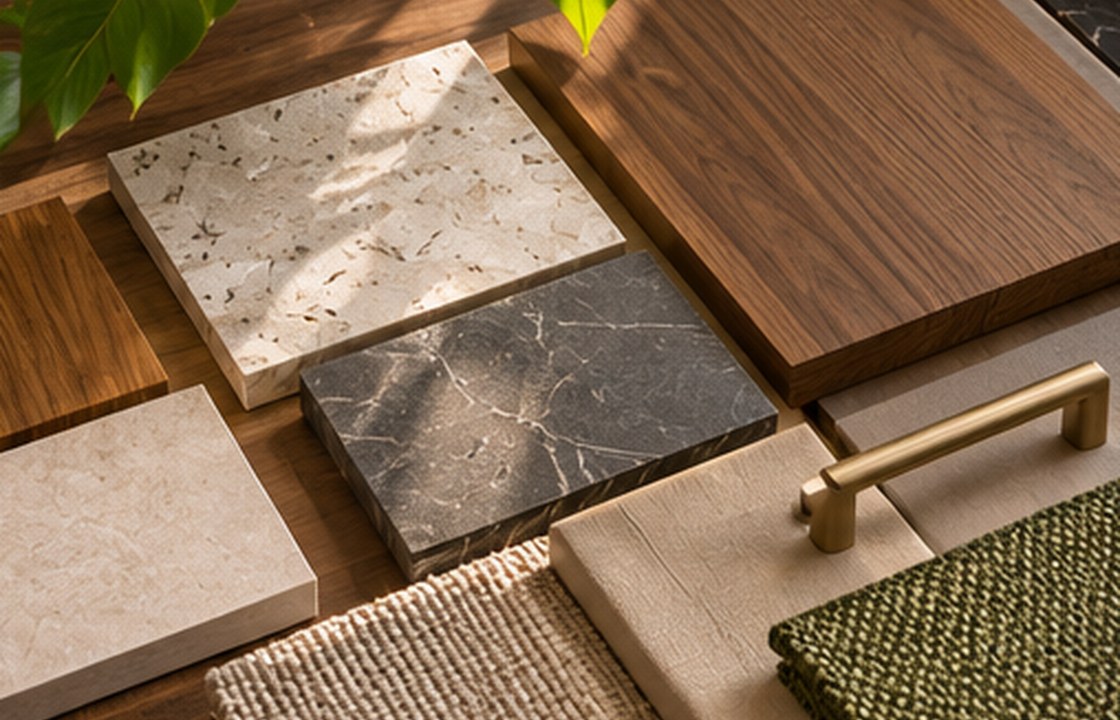
View samples together under the intended room lighting. Agree on joints, edges, colour tolerance and substrate requirements before procurement. Ask for mock-ups where workmanship makes a major visual difference, such as stone corners and curved joinery.
The final design approval should include a check of signed sample and mock-up register plus a clear acceptance test at handover. A signed sample, short mock-up or site inspection record can make this decision auditable.
A Kuala Lumpur planning scenario
For a family home in Bangsar, durable flooring at the entry and easy-clean cabinet finishes around a busy kitchen can be paired with more tactile fabrics in dry lounge areas. The objective is not one material everywhere but the right material for each task.
This scenario is illustrative, not a description of a completed SATU project. It shows why the brief should be tested against the actual property, its users, and the relevant technical conditions before design is approved.
Project checklist before you approve the design
Use this list when briefing the design team, comparing options, or reviewing site progress. Add property-specific requirements and ask qualified advisers to verify technical or regulatory matters.
- Exposure map of wet and high-touch zones
- Manufacturer data and cleaning instructions
- Substrate and installation system checks
- Replacement availability and spare-material plan
- Signed sample and mock-up register
Common mistakes to avoid
Three recurring risks in choosing materials for tropical humidity are approving the visual concept before confirming technical conditions; buying fixtures or furniture without checking exact dimensions and service access; and leaving responsibility for inspections or maintenance undefined.
A short written decision log, relevant mock-ups, and clear approval stages help teams catch these issues while changes are still manageable. A responsible design process also separates creative ideas from promises that depend on permits, specialist verification, or the condition of the existing building.
Frequently asked questions
Is natural wood always unsuitable for humid climates?
No. Performance depends on species, treatment, detailing, ventilation and maintenance.
Are large-format tiles automatically easier to maintain?
They reduce visible joints but require careful installation, flat substrates and correct movement detailing.
How do I compare similar-looking finishes?
Compare warranty terms, performance, cleaning methods and local replacement supply as well as appearance.
Design for the way the space will really work
Successful choosing materials for tropical humidity balances what people want to see with what they will actually experience. Begin with a clear brief, involve specialists before critical decisions, and ask for evidence that important details can be built and maintained. The official SATU website describes design planning, green design, project management, engineering, procurement and construction, and migration management services. Explore the official services or contact the studio about your particular space.
Further reading and professional verification
For the studio’s service scope, consult SATU’s official service overview. For projects affecting structural, mechanical, fire, or building controls, seek advice from qualified local professionals and relevant Malaysian authorities; this article is planning information, not an approval or code-compliance determination.